Exercising Through Perimenopause: Energy, Sleep, Mood and Brain Fog
Can I be honest about what most women come to me for?
It usually starts with the weight. The number on the scales. The jeans that don't sit right anymore.
But once we actually sit down and talk, it's almost never just that. It's the tiredness that no amount of sleep seems to touch. The nights of lying awake at 3am. The mood that swings without warning. The "why have I walked into this room?" moment, five times a day.
If you're a woman reading this thinking "this is exactly me, but I can't quite explain it to anyone"… you are not imagining it. And you are not falling apart.
This is perimenopause. And I've spent the last 7 years here in Southampton helping women over 30 feel like themselves again through exactly this stretch of life. So let me walk you through it, the way I would if you were sat across from me with a cup of tea.
In this guide
It's about so much more than weight
Here's the first thing I want to gently shift for you.
Perimenopause gets talked about as a weight problem. And yes, the way your body holds weight does change (I've written all about that in my guide on menopause weight gain and what actually shifts it, if that's the bit you're stuck on).
But the weight is only one chapter. For most women I meet, it isn't even the chapter that hurts the most.
What hurts is feeling like a stranger in your own body.
The energy that used to be there… just isn't. The sleep that used to come easily… doesn't. The brain that used to hold ten things at once now drops half of them. And the mood, the patience, the spark, all of it feels turned down a notch or two.
None of that shows up on a set of scales. But it's the thing women whisper to me when they finally feel safe enough to say it out loud.
And here's why I'm telling you this first. Because if you only ever measure perimenopause exercise by whether the number went down, you'll miss the changes that matter most. The ones you feel long before you see them.
How movement helps the symptoms
So let's talk about what movement actually does. Not the version on a fitness poster. The real, everyday version.
I'll be straight with you first: exercise is not a cure, and perimenopause is wildly different from one woman to the next. Some sail through with barely a symptom. Others get hit with the lot. So please read this as "here's how movement tends to help", not "do this and the symptoms vanish". They don't always. But the right kind of movement, often, genuinely helps.
- Energy. It feels backwards, I know. You're shattered, so the last thing you fancy is exercise. But gentle, regular movement is one of the most reliable ways to lift that flat, foggy tiredness over time. Not by exhausting you further. By topping you back up.
- Sleep. Perimenopause can absolutely wreck your sleep, and there's only so much any of us can control. But women who move during the day, and lift a little, very often tell me they fall asleep easier and wake less. Better days tend to make better nights.
- Mood. Movement is one of the kindest things you can do for a wobbly mood. Not because it fixes everything, but because it gives your head somewhere to go and your body something steady to lean on when the inside feels all over the place.
- Brain fog. That "where did my brain go?" feeling is real and it's common. Getting your blood moving, building a bit of strength, looking after your sleep… it all stacks up in your favour. Many women find the fog lifts a little once movement becomes a regular thing.
Notice what's not on that list. Nothing about shrinking yourself. This is about feeling well. That's the whole point.
The best exercise for perimenopause isn't the hardest one. It's the one that leaves you feeling better than when you started, often enough that it becomes a habit.
What kind of exercise actually helps
Right, the practical bit. What should you actually do?
And I'll start with what to do less of. Because this is where so many women go wrong, with the best of intentions.
When the weight creeps and the energy dips, the instinct is to punish yourself. Long, grinding cardio. Smashing classes. Running yourself into the ground.
In perimenopause, that can quietly backfire. Your body is already under more stress than usual, and flogging it with endless high-intensity work just piles more on. You end up more tired, more wired, sleeping worse, not better.
So here's what I steer women towards instead. Two things, mostly.
Strength training. This is the big one. Through perimenopause you're slowly losing muscle, and muscle is what keeps you strong, steady, and protects your bones at exactly the age they start to thin. Lifting a little, a couple of times a week, does more for a midlife body than almost anything else. And "lifting" does not mean a barbell and a room full of blokes, it means dumbbells, bands, kettlebells, your own bodyweight. I've gone deeper on this in my guide to strength training for women over 40, if you want the full picture.
Walking. Honestly, don't underestimate it. A daily walk is gentle on a tired body, it lifts your mood, it helps your sleep, and over a week it adds up to far more than people think. It's the most underrated tool you've got, and it costs nothing.
Strength plus walking. That's the backbone of exercise for perimenopause for most of the women I coach. Add a bit of stretching or yoga if it feels good. But you don't need to live in the gym, and you definitely don't need to punish yourself.
Rachel is a lovely example of this. She came in tired and short on confidence, not chasing a number. She trained steadily, didn't flog herself, and over time lost around 28kg. But ask her what changed most, and she'll tell you it was getting herself back.
One more honest note while we're here. If you're on HRT, or thinking about it, exercise and HRT can sit really nicely alongside each other. I've written separately about HRT and exercise, but the headline is simple: that's a conversation for you and your GP, and movement supports you either way.
Training around the tough days
Now this is the part most fitness advice skips. And it matters more than all the rest.
Perimenopause does not give you the same body every day. Some days you'll feel strong and ready. Other days you'll wake up wrung out, foggy, sore, or just flat.
On the tough days, please hear me on this.
You do not have to earn your rest. You do not have to push through. And you are absolutely not "being lazy" if you scale it right back.
A bad day doesn't mean a missed day. It means a gentler day. A short walk instead of a session. A lighter set. Ten minutes instead of forty. Movement that meets you where you are, rather than where you wish you were.
The women who do well through this stretch aren't the ones who go hardest. They're the ones who keep showing up, kindly, in whatever shape the day allows. Consistency that bends beats heroics that burn you out. Every single time.
And if it's been a long while since you moved at all, that's completely okay too. You're not starting from behind, you're just starting. (I wrote a whole gentle guide on starting exercise again over 40 for exactly that.)
You don't have to do this alone
Here's the honest bit.
None of what I've told you is complicated. Lift a little. Walk often. Be kind on the hard days. Keep showing up.
But doing it on your own, week after week, while you're tired, foggy, busy, and your confidence has taken a few knocks… that's the hard part. That's the part we sort out for you.
That's exactly why I built Mindset. Small groups of women, training in a room where they finally feel like they belong, with someone in their corner who actually gets what midlife feels like. No judgement. No being the odd one out. Just real women, at every stage of this, looking out for each other. 💜
Because the hardest part was never the training. It's making that first decision to do something different, on a day when you don't feel much like it.
Do that one thing, and the rest follows. And you deserve to feel good too. 💜
Come and try it. Properly.
Start with a completely free 7-day trial. No contracts. No pressure. No awkward sales pitch. Just 7 days to meet the coaches, get to know the ladies, and feel for yourself what makes this place different.
Start Your Transformation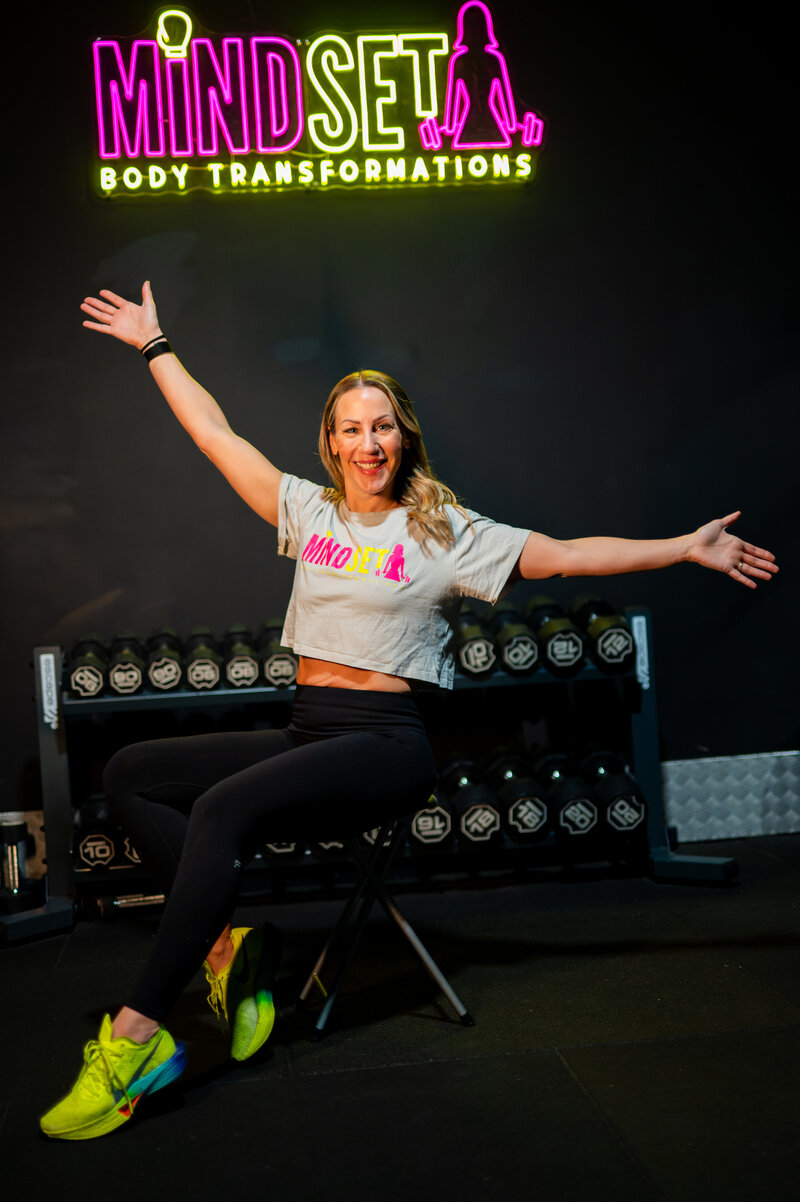
Written by Carrie
I'm the founder and head coach at Mindset Body Transformations in Southampton. I've spent the last 7 years helping women over 30 feel stronger, healthier and a lot more like themselves again. More about me.
Quick honest note: this is general advice from a coach, written to help you feel a bit more in control, not medical advice. Perimenopause is different for every woman, and exercise supports your wellbeing but isn't a cure. If you've got health concerns, or you're thinking about HRT or supplements, please have a chat with your GP first.