Walking Is Brilliant. It Just Won't Save Your Bones.
"I do my steps."
I hear it most weeks. Usually from a woman in her fifties or sixties, sat across from me with a cup of tea, telling me about her walk. The dog. The common. Ten thousand on her phone by teatime, most days, without fail.
And do you know what? She should be proud of that. Walking is genuinely good for you and I would never talk a single woman out of it.
But if you're walking because somebody told you it would keep your bones strong… I have to be straight with you. That's the bit I need to talk about.
In this guide
- The bit nobody mentions about walking
- What's actually happening to your bones
- Muscle is the other half of the story
- What actually works, and the proof
- "But I've never picked up a weight in my life"
- Why we do it in small groups
- The part that isn't about your bones at all
- Your questions, answered honestly
The bit nobody mentions about walking
Walking is weight-bearing. It's brilliant for your heart, your blood pressure, your head and your mood. Keep going.
Here's the honest turn, though. Bone doesn't respond to movement. Bone responds to load.
Think about what your skeleton experiences on a walk. Your own body weight, moving at a steady pace, on a flat pavement. It has done that exact thing every day for forty years. Your bones have long since adapted to it. They've no reason left to change.
The Royal Osteoporosis Society says it plainly in its guidance: walking, swimming and cycling sit alongside bone-building exercise, they don't replace it. What actually stimulates bone at the hip and the spine is resistance work and impact. Something heavier than you. Something that makes the muscle pull hard on the bone it's attached to.
Your bones adapt to whatever you ask of them. Ask a little more, and they get stronger. Ask the same thing every day for twenty years, and they've no reason to bother.
What's actually happening to your bones
Oestrogen protects bone. When it drops away at menopause, bone loss picks up speed, and the fastest losses come in the years straight after. That's not scaremongering, it's just the biology, and most women are never told it in plain English.
Which is how you end up with a woman of 61 who eats well, walks daily and feels perfectly fine, getting a scan result she wasn't expecting.
Nothing about that is her fault. She did everything she was told to do. She was just never told the other half.
If you want the fuller picture of what shifts in midlife, I've written about menopause weight gain and about how HRT and training work together.
Muscle is the other half of the story
Bone gets the attention. Muscle quietly matters just as much.
From your thirties onwards you lose muscle gradually, and after 60 that loss speeds up unless you give your body a reason to keep it. There's a medical name for it, sarcopenia, and it's one of the biggest predictors of how independent you'll be in your eighties.
I don't think about it in medical terms though. I think about it like this:
- Getting up off a low sofa without planning it first.
- Carrying both bags of shopping in one trip.
- Coming down the stairs with a laundry basket you can't see over.
- Picking up a grandchild who has decided, right now, to be picked up.
- Catching yourself when you trip on a kerb, instead of going down.
That last one is the one that keeps me up at night for the women I coach. A fall at 55 is a bruise and a bad word. A fall at 80 can be the thing that changes everything. Strong legs and strong bones are what stand between those two.
What actually works, and the proof
This is my favourite bit, because there's proper evidence for it and it's a lot more hopeful than most women expect.
There's an Australian trial called LIFTMOR, published in the Journal of Bone and Mineral Research in 2018. They took 101 postmenopausal women with low bone density, average age 65. Not athletes. Women exactly like the ones who walk into my studio.
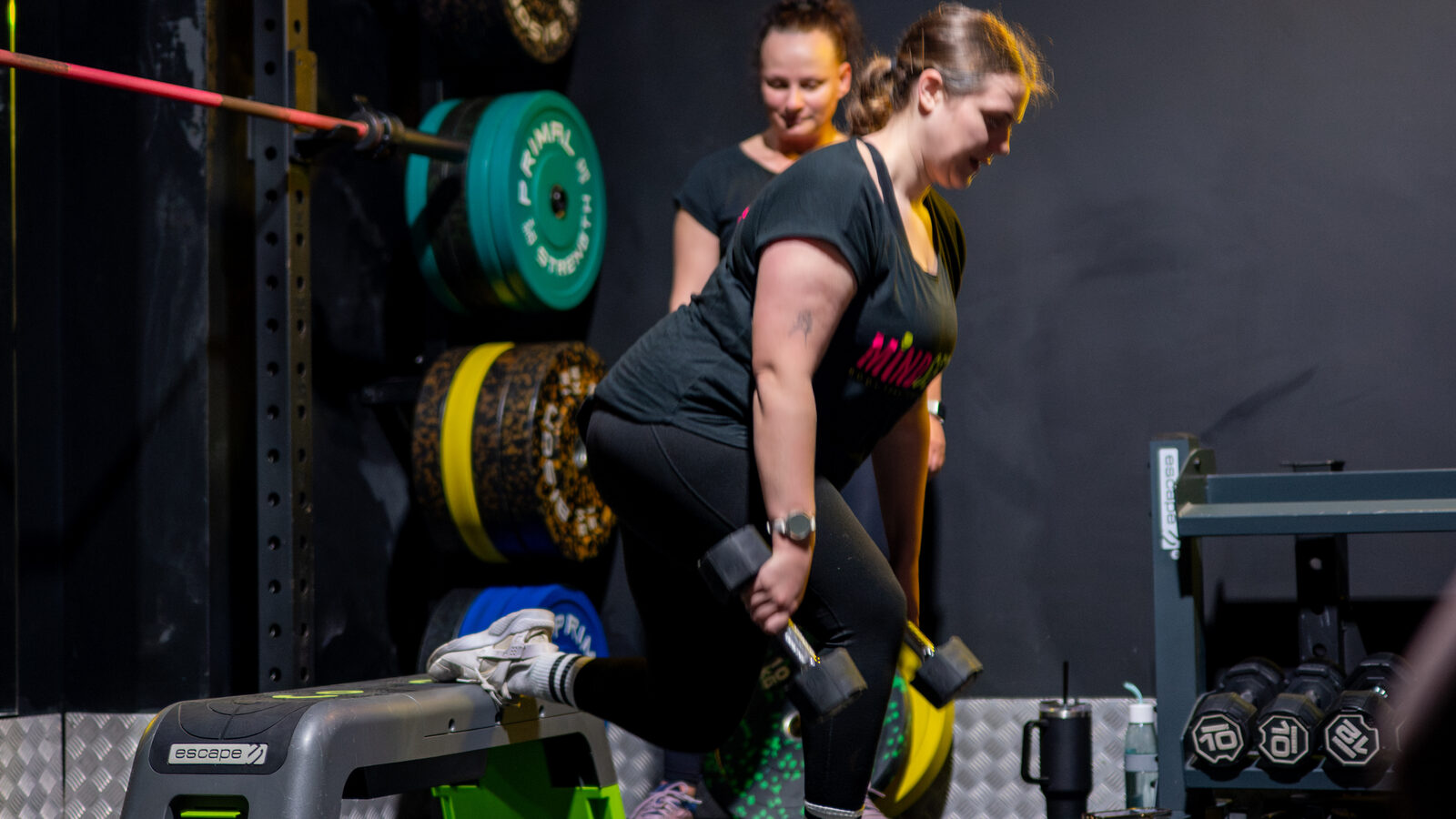
Half of them did two supervised sessions a week. Thirty minutes each. Proper resistance training, with weight that genuinely challenged them. The other half did a gentle home-based programme, the sort of thing women over 60 usually get handed.
After eight months:
- Spine bone density went up 2.9% in the training group. In the gentle home group it went down 1.2%.
- Hip bone density held steady in the training group and dropped in the other one.
- They got stronger on every functional test. Getting out of a chair. Standing up and walking. Reaching without wobbling.
- They gained a little height, while the comparison group lost some.
Read that again, because it matters. Two half-hour sessions a week. Women averaging 65, who already had thinning bones. And their spines got denser.
Two things made it work. The weight was heavy enough to mean something. And every session was supervised, by someone who knew what they were doing.
"But I've never picked up a weight in my life"
I know. And I know exactly what's going through your head, because I've heard it from hundreds of women now.
"I'll be the oldest one there."
"I won't know what any of it does."
"Everyone will be looking at me."
"I'll do it wrong and hurt myself."
None of that is silly. It's honest, and it's the actual reason most women your age never start. Not laziness. Not lack of willpower. Just the very reasonable fear of walking into a room full of equipment you've never used, on your own, at 62.
So let me take a couple of those off you.
You will not bulk up. Building serious muscle is slow and difficult even for people chasing it deliberately. What you'll build is strength, and you'll notice it first in ordinary things, like the stairs feeling shorter.
You will not be the oldest. Our women run from their thirties into their sixties and beyond, and the older ones are very often the ones getting on with it while everybody else discusses the weather.
And you will not be left to work it out yourself. That's rather the whole point.
If you'd like the gentler starting point first, I wrote a piece for women who haven't trained in years, and one for the over-50s about getting past the fear of the weights room.
Why we do it in small groups
Look at what made LIFTMOR work again. Supervised. Twice a week. Small.
That's not a coincidence, and it isn't a sales line. It's the whole reason I built Mindset the way I did.
A big commercial gym gives you a room full of machines and wishes you luck. One-to-one coaching is wonderful, and for a lot of women it's out of reach week after week. Small groups sit in the middle, and for women over 60 I genuinely think they're the best thing going.
- Someone is watching your form on every single rep, so you train hard and safely.
- The weight goes up when you're ready, not when a programme says so.
- You're in a room of women in the same season of life, not surrounded by twenty-somethings.
- You get the bit no app has ever managed: people who notice when you don't turn up.
Women only. Over-30s. Coached properly, in a group small enough that I know your name, your knees and what you're working towards.
The part that isn't about your bones at all
Here's what I really wanted to say.
The bone density is real, and the muscle is real, and both of them matter enormously. But they're not what I watch change first in a woman who starts training with us at 60.
What changes first is what she thinks she's allowed to do.
Somewhere along the way, women your age got handed a very small story about themselves. Be careful. Don't overdo it. Take it easy now, at your age. It's kindly meant and it shrinks your life a little more every year you accept it.
Then she deadlifts something she'd have said was impossible eight weeks ago. And I watch the whole story fall apart in her head, right there on the gym floor.
After that it stops being about the gym. She books the holiday with the walking in it. She stops asking somebody else to carry things. She catches herself standing differently.
That's why this place is called Mindset, and why our ethos has always been More Than Training. A Mindset Shift. The body comes along. The belief goes first.
You're capable of far more than you've been told. Usually far more than you believe. 💜
Your questions, answered honestly
How often should a woman over 60 do strength training?
Twice a week is enough to make a real difference. The LIFTMOR trial, which improved bone density in women averaging 65, used two supervised 30 minute sessions a week. You do not need to live in a gym. You need to turn up consistently and lift something that genuinely challenges you.
Is walking a good weight-bearing exercise for osteoporosis?
Walking is weight-bearing and it is good for your heart, your head and your general health, so keep doing it. But on its own it does very little for bone density at the hip and spine. The Royal Osteoporosis Society treats walking, swimming and cycling as a complement to bone-building work, not a replacement for it. Bone responds to load and impact.
What weight should a woman over 60 be lifting?
Heavier than most women expect, and lighter than they fear. The honest answer is that it should feel properly hard by the last couple of reps. Light weights you can wave around for twenty reps will not give bone a reason to change. You start where you are and build up gradually, which is exactly what coaching is for.
Can you improve bone density after 60, or is it too late?
You can. The LIFTMOR trial recruited postmenopausal women with osteopenia and osteoporosis, average age 65, and the training group increased spine bone density by 2.9% over eight months while the comparison group lost 1.2%. Bone responds to load at any age. It is later than 40, it is not too late.
What exercises should women over 60 avoid?
Fewer than you would think. If you have diagnosed osteoporosis, loaded end-range spinal flexion, so heavy bending and twisting forward, is the main thing to be careful with, and that is worth a proper conversation with someone who knows your history. Everything else is usually a question of loading it sensibly rather than avoiding it forever.
Come and see for yourself.
If you're over 50 and you've been wondering whether it's too late, come and have a chat with me. No contracts, no pressure, no awkward sales pitch. Just a conversation about where you are and what you'd like your next twenty years to feel like. 💜
Start With a Chat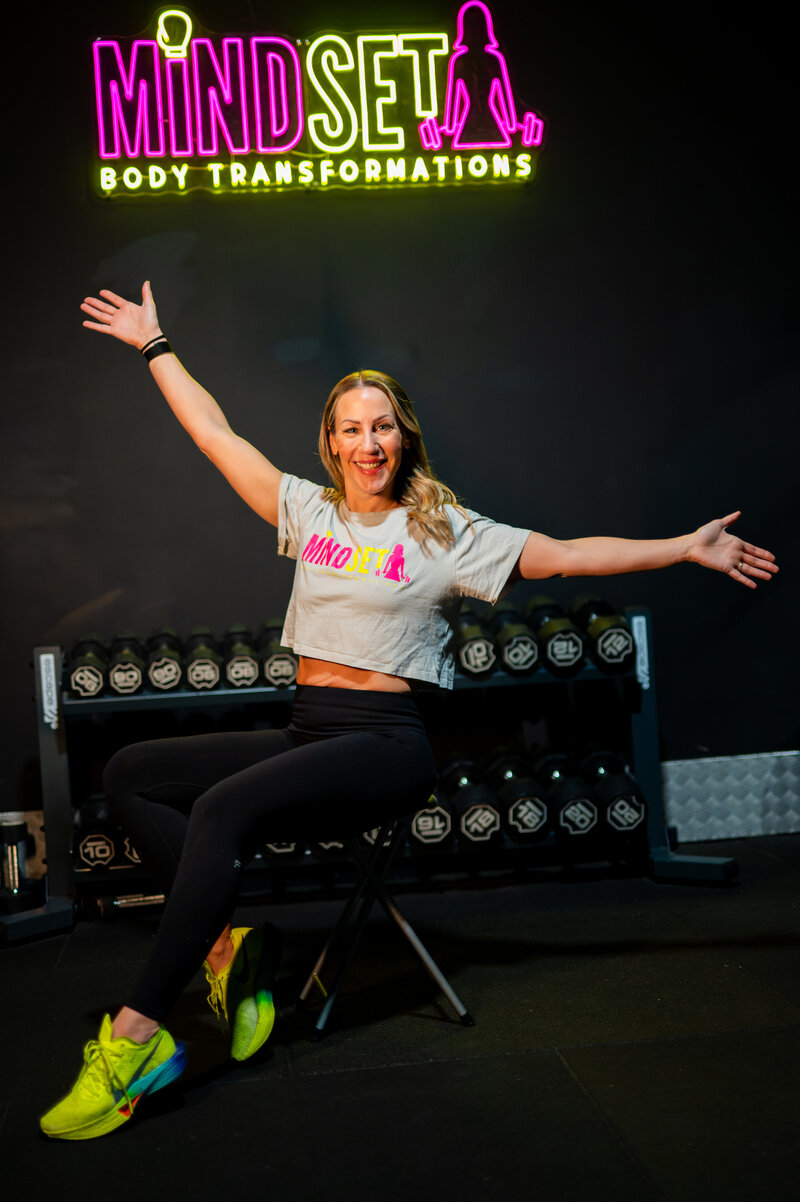
Written by Carrie
I'm the founder and head coach at Mindset Body Transformations in Southampton. I've spent the last 7 years helping women over 30 feel stronger, healthier and a lot more like themselves again. More about me.
One last thing. I'm a coach, not a doctor, so this is what I've learned from 7 years in a room with real women, alongside the research I've pointed you to. If you've already been diagnosed with osteoporosis or you're recovering from a fracture, get someone who knows your history involved before you start loading up. Then come and get strong anyway.